

Stop Sending Generic Offers:
How to Build Campaigns That Learn
Every campaign teaches you something. Most marketers don’t capture the lesson. Whether you sell insurance, groceries, home services, or software, effectiveness comes from closing the loop: figure out what worked, what didn’t, and make the next campaign better. Here is a practical way to do that, from audience research through email execution.
Why Generic Marketing Fails Everywhere
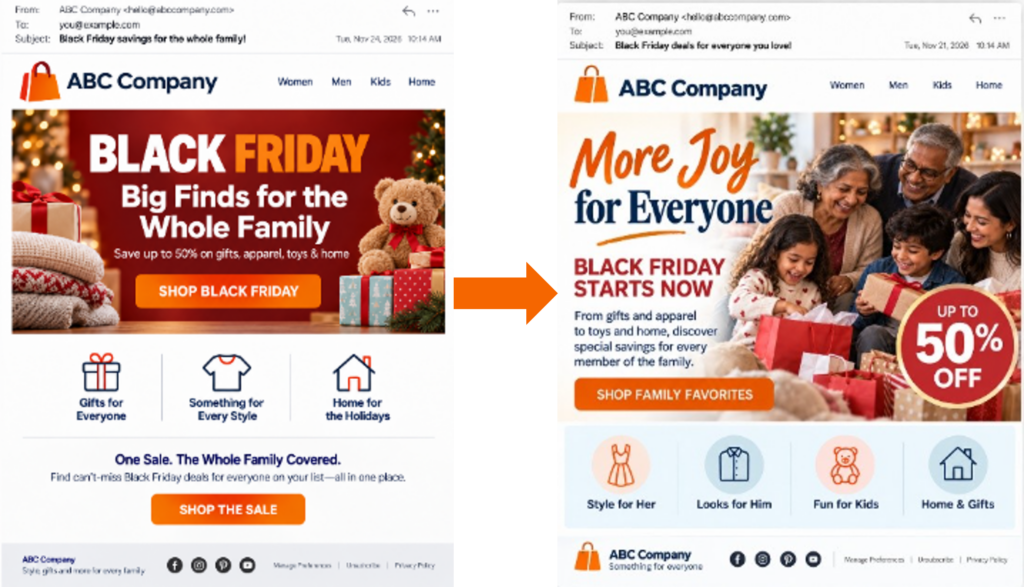
You’ve probably received an offer and thought, “this has nothing to do with me.” A baby registration ad sent to a household with no kids is a classic example. The product may be excellent, but the message lands at the wrong moment, for the wrong need, with the wrong value.
This happens in every industry. A remote worker, a gamer, and a busy family might live on the same street and use the same provider, bank, or retailer. They don’t all buy for the same reason. When your message leads with features and price, you force each person to translate those features into personal value. Other industries have trained customers to expect better, with brands that use the data they have to make the next decision easier.
Start Before the Channel
The biggest decisions in a campaign happen before the first email, social ad, or mail piece goes out. Begin by understanding your audience.
Your customer data already tells you a lot. You can see who buys, what they buy, how long they’ve been with you, and how they pay. That’s a strong foundation, but it only describes the people you already have.
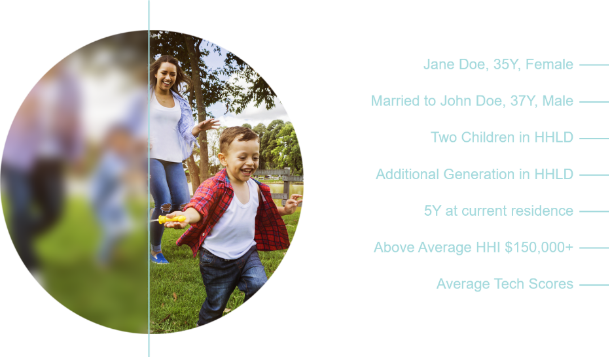
Audience intelligence adds context behind the household. You move from knowing who bought what to knowing how people live, what matters to them, and how your product fits into their daily routine. That shift changes what you say and where you say it.
Aim For Better Decisions, Not More Data
More data isn’t the goal. Better decisions are. The most useful audience data gives you:
- Demographic, financial, and psychographic profiles for your market
- Segmentation that shows who lives there and what they value
- Lifestyle and behavior indicators, such as how tech-savvy people are, how they spend, and how they consume media
- Reach information that tells you who these people are, where they live, and how to contact them by email or through other digital identifiers outside the home
With this in hand, the question changes from “who can we market to?” to “who should we market to, and what should we change because of what we know?”
A Worked Example: The Multigenerational Family
Say you want to acquire more family households. Segmentation isn’t the end product here. It’s the starting point for deciding who to reach and what to say. Ask three questions.
- What matters to them? In a connectivity example, this family wants to stream kids’ shows without interruption, needs signal extenders for the in-law suite, and wants advanced tech support for relatives living there.
- Where will they engage? They’re on the go, so think digital, at home, and in third spaces. Don’t forget grassroots efforts. They can be reached through both the email inbox and the physical mailbox.
- When is it relevant? For this family, anytime. Their needs are fluid and change fast, and they aren’t married to a provider.
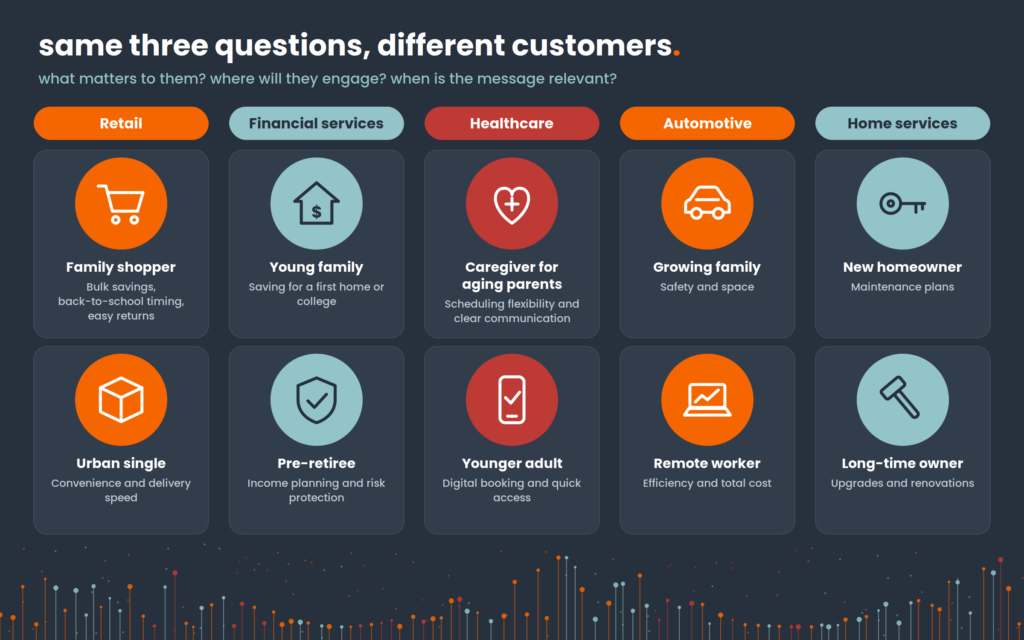
Those answers move you from a generic message to one that resonates. The same three questions work in any category:
- Retail: A family-focused segment might care about bulk savings, back-to-school timing, and easy returns. A single-person urban segment might care about convenience and delivery speed.
- Financial services: Young families might respond to saving for a first home or college. Pre-retirees might want income planning and risk protection.
- Healthcare: Caregivers for aging parents need scheduling flexibility and clear communication, while younger adults may prioritize digital booking and quick access.
- Automotive: A growing family cares about safety and space. A remote worker with a short commute cares about efficiency and total cost.
- Home services: New homeowners might want maintenance plans. Long-time owners might be ready for upgrades and renovations.
In each case, the question is the same: what matters to them, where will they engage, and when is the message relevant?
Use the Same Audience Strategy Across Channels
Once you understand the audience, put that insight to work where they’re most likely to engage. Email and direct mail are a strong foundation. The same audience strategy can also inform social media, digital display, connected TV, and streaming.
The goal is not to be everywhere, and it’s not to repeat the same message in every channel. The goal is a coordinated experience, with the right message in the right place and the audience at the center. A household that sees a relevant ad on their connected TV and then gets a mailer that builds on the same idea should feel understood, not chased.
Email Fundamentals To Check Before You Hit ‘Send’
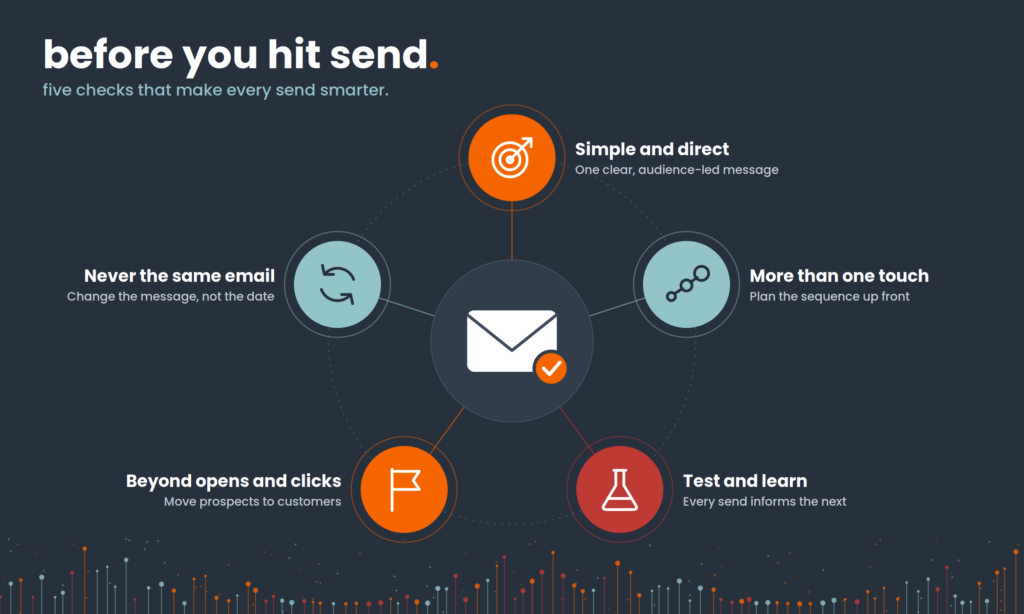
There’s a line worth remembering here: just because it’s common knowledge doesn’t mean it’s common practice. These sound obvious until you’re staring at a subject line and an emoji looks tempting. Before the next send, check four things.
- Make it easy to trust. Keep the message simple, direct, and driven by what you know about the audience.
- Plan more than one touch. A single email is rarely enough to move someone. Map out a sequence in advance.
- Test, learn, and improve as you go. Treat every send as an experiment that informs the next one.
- Don’t mistake opens and clicks for the goal. They’re easy to count, but the real objective is a customer interaction meaningful enough to move someone from prospect to customer.
One more rule: don’t keep sending the same email until someone responds. Persistence matters, but repetition without relevance trains people to ignore you.
If your tools offer pre-built campaigns, use them. They’re tried and true, and they get you to market faster with the message and channel plan already outlined. Otherwise, ask us how we can help you with our own email campaign execution solution.
The Cycle To Repeat
Effective marketing is an integrated strategy across the full process, not a collection of isolated tactics.
- Study your existing customers. Learn what your best customers look like and what they value.
- Look at who’s in your market. Understand the households you haven’t reached yet.
- Build smarter segments. Don’t pull them out of thin air. Let audience insight shape them.
- Deepen your understanding of the customer. Smarter segments sharpen your picture of what they need.
- Deliver relevant, timely messaging. Match the offer and channel to the audience.
- Measure, refine, and repeat. Feed what you learned into the next campaign.
When these steps work together, you get a marketing cycle that carries the customer to the finish line. Each pass makes the next one stronger.
Try It On Your Next Campaign
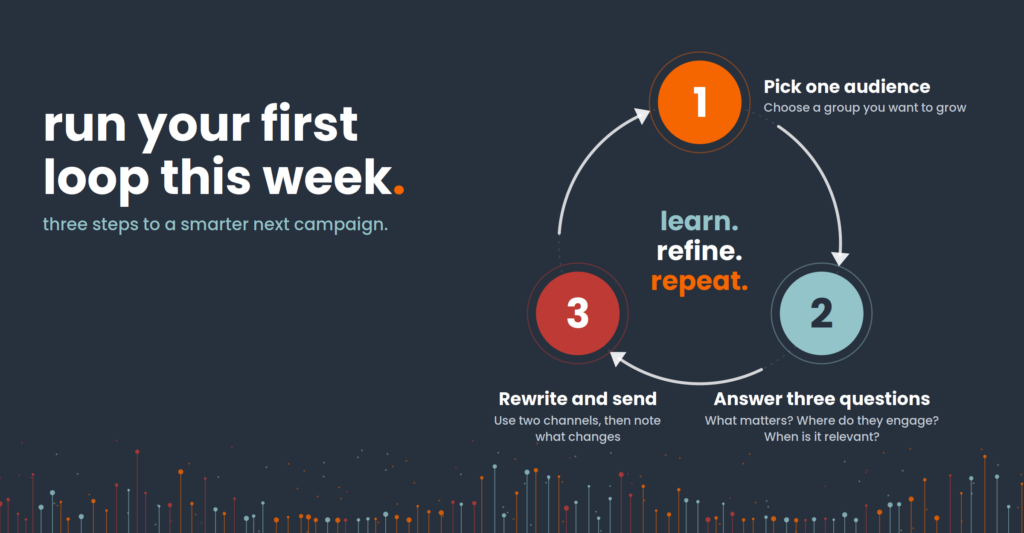
Pick one audience you want to grow. Answer the three questions: what matters to them, where they’ll engage, and when the message is relevant. Then rewrite your most generic message to speak to those answers, send it through at least two channels, and note what changes. That’s the loop, and it gets easier every time you run it.
Need help finding your next customer?
Questions
Please contact the Claritas Sales Team at866-ROI-TEAM (866-764-8326)
Current Clients
Please contact the Solution Center at855-400-ASST (855-400-2778) for immediate assistance